Cosmic Mysteries

Sophie
| 04-11-2026
 · Science team
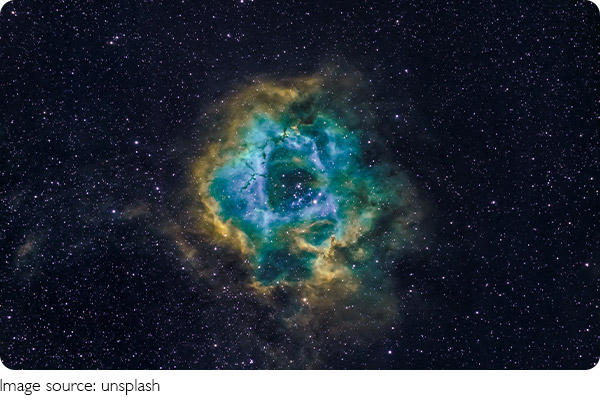
The universe, a term encompassing the vast expanse of space and the myriad celestial bodies and diffuse matter within it, presents one of the most intricate and captivating mysteries in the realm of science.
The origins of our universe constitute a profound puzzle that has intrigued scientists for millennia. It is a dynamic, ever-evolving material world, subject to ceaseless motion and transformation.
For thousands of years, scientists and thinkers have sought answers about the origins of the universe. Today, the prevailing theory, widely accepted by the scientific community, suggests that the universe began with a period of rapid expansion from an extremely hot, dense state approximately 13.8 billion years ago.
Fungi, with their diverse roles from nature's recyclers to culinary delights and medicinal marvels, shape our world.
Integrated chips: The tiny powerhouses driving the technological revolution, enabling smaller, more powerful devices.
Humidifiers enhance indoor air quality and health, offering diverse types and essential tips for optimal usage.
Solar energy is a transformative force in the global push for sustainable energy solutions.
Discover the wonders of magnifying glasses and their transformative impact.
Come along and learn about ten dangerous chemicals and try to avoid them in the future.
In the earliest moments of the universe, all observable matter and energy existed in an extremely hot, dense state. As space rapidly expanded and cooled, fundamental particles began to form, eventually combining into atoms and laying the foundation for the development of stars, galaxies, and other cosmic structures.
As these substances congregated, local pressure and energy began to mount, causing the material sphere's volume to expand continually.
Around 13.8 billion years ago, this process reached a critical juncture, culminating in the simultaneous release of an immensely potent burst of energy. This pivotal moment marked the inception of the universe's rapid and staggering expansion.
The 1960s ushered in a pivotal discovery for cosmology as astronomers detected cosmic microwave background radiation—a faint, evenly distributed radiation suffusing the universe.
This discovery provided strong evidence supporting the theory of the universe's origin, as scientists interpreted the radiation as residual heat left over from the earliest stages of cosmic evolution.
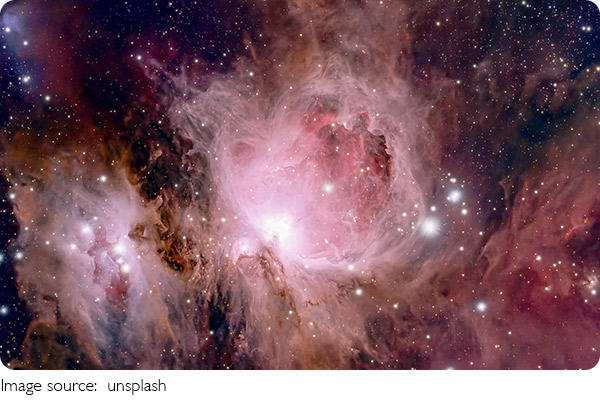
Following the universe's initial expansion, matter gradually came together to form larger structures, including galaxies, stars, and planets. The formation and evolution of stars play a crucial role in the development of the universe. Through nuclear fusion in their cores, stars generate immense amounts of energy and light, illuminating the vast expanse of space.
Within the cosmos, stars and galaxies amass into colossal structures, termed galaxy clusters and superclusters. The study of these structures, their interactions, formation, and evolution, forms an integral part of the overarching exploration of the universe.
By scrutinizing galaxy clusters, scientists gain valuable insights into the distribution and properties of dark matter, an enigmatic and abundant cosmic substance that exerts gravitational influence on the motion of galaxies and galaxy clusters.
Dark matter and dark energy stand as two of the most confounding mysteries in cosmology. Their nature and origin remain elusive, yet they exert profound effects on the universe. Dark matter's gravitational pull shapes the universe's structure, while dark energy is believed to fuel the universe's accelerated expansion.
The comprehension of the universe's origin and evolution stands as a pinnacle achievement of 20th-century science, borne from decades of pioneering experimentation and theoretical inquiry.
State-of-the-art telescopes, whether terrestrial or in space, capture light from galaxies situated billions of light-years away, offering glimpses into the universe's infancy.
The enigma of the universe's origin and evolution continues to inspire awe and curiosity. Scientists press onward, engaging in ongoing observation and study to unearth deeper revelations.
As we advance in both experimental and theoretical realms, we anticipate that our understanding of the universe will continue its expansion and maturation, ushering in fresh insights into the mysteries of the cosmos.