AI Meets Investing

Pankaj Singh
| 16-03-2026
 · News team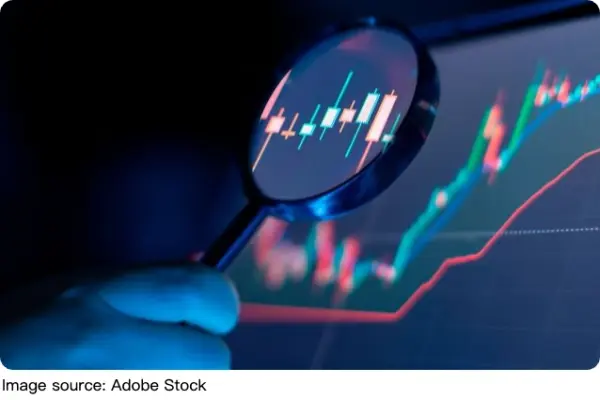
Imagine sitting with a cup of coffee, scrolling through the stock market, while a robot quietly analyzes millions of trades and helps identify where to invest.
Sounds like science fiction, right? Well, in today’s financial world, it is very real. Algorithms, AI, and big data are reshaping how investment decisions are made, and humans are not always making the first move anymore.
Algorithmic trading, or algo-trading, uses computer programs to automatically execute trades based on predefined rules and real-time data. Unlike humans, robots can process millions of data points in seconds, spotting trends, patterns, and anomalies that would be impossible to see manually. Think of it this way: while a person might spend hours analyzing a stock’s quarterly report, a robot can scan thousands of reports, news articles, and social-sentiment signals in a fraction of the time, then decide whether to buy or sell, sometimes in milliseconds.
The Office Habit That Quietly Shapes Financial Compliance
The Hidden Way Digital Wallets Are Changing Everyday Spending Habits
The Hidden Trade-Off in Real Estate Investing Most Buyers Notice Too Late
What Rising Skylines and Packed Commutes Reveal About the Future of Real Estate
How RegTech Turns Regulatory Pressure Into a Business Advantage
From Bitcoin to Tokenization: The Financial Revolution That’s Already Underway
AI-driven systems rely on several core tools. Big data analytics helps them process stock prices, economic indicators, market news, and investor sentiment. Machine-learning models allow them to learn from historical behavior and refine predictions over time. Quantitative models help estimate risk, forecast possible returns, and optimize portfolios. In some cases, high-frequency systems can execute thousands of trades per second to capture very small price changes. In practice, this decision-making process combines data analysis, probability, and rule-based execution.
These systems offer several advantages over human traders. They work continuously, respond quickly, and are not affected by panic or overconfidence. They can also scale efficiently, managing large volumes of information and many portfolios at the same time. Larry Cao, an investment-technology researcher, said that successful investment teams increasingly combine human judgment with technology instead of treating them as separate functions.
Still, automation comes with clear risks. Robots depend on the quality of the data they receive, so weak inputs can lead to weak outputs. Unexpected news, abrupt market moves, or software failures can also produce costly mistakes. When many automated systems react to the same signal at once, they may intensify short-term volatility and push prices sharply in one direction.
That is why the strongest approach is not human versus machine, but human with machine. People still play a central role in setting goals, building strategies, reviewing risk, and responding to unusual situations that models may not fully understand. Machines are strongest at processing scale and speed, while humans remain essential for oversight, context, and judgment.
The future of investing is likely to be more collaborative, more analytical, and more adaptive. Investors who understand how these tools work will be better positioned to evaluate their strengths and limits. Rather than seeing algorithmic trading as a replacement for people, it makes more sense to view it as a system that extends what skilled investors can do when paired with thoughtful human supervision.