Market Wisdom Cycle

Sofia Alvarez
| 14-10-2026
 · News team
Hello, Lykkers! Financial markets have a strange rhythm.
At times they feel calm and steady, and at other times everything seems to move with unstoppable energy, as if prices can only go one direction.
Yet history shows a familiar pattern repeating again and again. What begins as excitement over a new opportunity can slowly turn into something far more fragile.
Understanding this cycle doesn’t require complex models—just attention to how human behavior shifts as confidence builds, stretches, and eventually snaps.
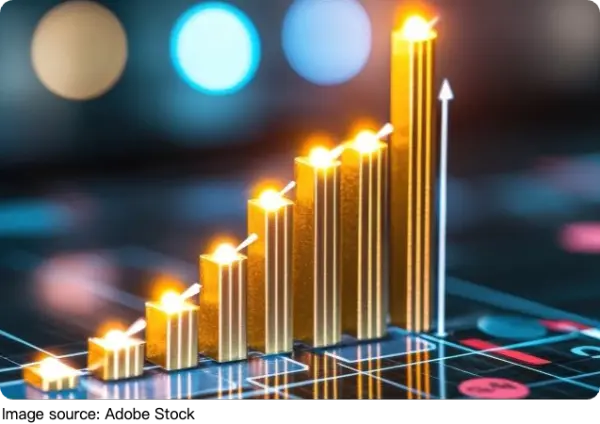
The Spark
Every major market surge begins with a shift in conditions—a new technology, easier access to funding, or a change in economic environment that alters how people think about value. Early on, only a small group of investors notices the opportunity, and price movements are usually modest.
Inside Crypto’s Hidden Risk Pyramid: Why Most Investors Are Climbing Blind!
Many families overlook this until it's urgent—have you planned ahead?
Simple Everyday Habits That Support Healthy Vision and Long-Term Eye Comfort
Weak ankles holding you back? These simple moves can improve stability fast!
Ever soared above the clouds in a dream? What does your mind know that you don't?
How minimalist finance lets you work less and reclaim the freedom you deserve through intentional money choices.
Economist Hyman Minsky, known for his Financial Instability Hypothesis, argued that periods of financial stability can themselves sow the seeds of future instability. As prosperity persists, borrowers and lenders may become increasingly confident, encouraging greater risk-taking and a gradual shift toward more fragile financial structures.
The Boom
As prices begin to rise more visibly, confidence spreads. More investors enter the market, headlines become more frequent, and conversations shift toward opportunity. The belief that “this time is different” starts to appear, even if it is rarely said directly.
At this stage, valuation often takes a back seat to momentum. Rising prices feed expectations, and expectations in turn push prices even higher.
Euphoria Builds
This is where things become emotionally charged. Almost everyone seems to be involved, and hesitation starts to feel like a mistake. Stories of rapid gains spread quickly, encouraging even cautious observers to join in.
Borrowing often increases here as investors try to amplify returns. Charles Kindleberger, a prominent economist and financial historian, studied recurring patterns of financial crises and speculative manias. He described how speculation can become self-reinforcing: rising asset prices attract more buyers, while the influx of new buyers pushes prices even higher, encouraging further speculation.
The Peak
At the top, conditions feel unusually calm on the surface, even though risk is at its highest. Price levels become difficult to justify based on underlying value, but confidence remains strong. Many participants believe the new level is permanent.
Behind the scenes, more experienced investors may begin reducing exposure quietly. However, new entrants often replace them, continuing to push prices upward or keeping them artificially stable. The system looks stable, but it is increasingly sensitive to change.
The Collapse
Eventually, something shifts. It might be a change in interest rates, a policy adjustment, or simply fading momentum. Once confidence breaks, the reaction can be swift.
Carmen Reinhart, known for her extensive research on financial crises, has shown how debt buildups and credit booms can precede severe financial crises and how the resulting asset-price collapses can be deep and prolonged.
High levels of debt can make economies and financial systems more vulnerable when conditions deteriorate, contributing to a painful process of deleveraging and economic contraction.
The Aftermath
After the sharp adjustment, markets begin to settle. Stronger ideas and businesses tend to survive, while weaker ones fade away. Prices eventually align more closely with realistic expectations, and stability gradually returns.
What history makes clear is that these cycles are not rare events—they repeat across different eras and different types of assets. The details change, but the emotional pattern remains remarkably consistent.
Ultimately, understanding market cycles is not about predicting the future—it is about recognizing the emotional undercurrents that drive decisions. Bubbles are not anomalies; they are reflections of human nature amplified by money and momentum. By staying aware of the stages—hope, euphoria, denial, and fear—you can navigate markets with clearer judgment.
Remember, the most valuable skill isn't timing the market perfectly, but understanding when the crowd's excitement has outpaced reality. Stay curious, stay cautious.