Card Payments Rise

Maya
| 14-10-2026
 · News team
The tap of a card at a checkout terminal now feels routine, but the habit reflects a deeper shift in how Americans pay.
The Federal Reserve's Diary of Consumer Payment Choice, based on recent activity, shows a payment system where cards dominate preference, credit card use continues to grow, and cash increasingly serves as a secondary option rather than the first instinct.

Card Shift
In the 2024 consumer-payment data, people averaged 48 payments per month—the highest level recorded at that time. Credit cards accounted for 35% of all payments in recent years, up markedly from earlier periods. That matters because it shows the move toward cards is not a short burst; it has become a long-running pattern.
Forget Investment Managers: Wealth Advisors Are Building Financial Empires!
You don't need a big salary to start growing wealth. Here's how ordinary people turn small money into real results.
A practical guide to the marketing tricks that make processed food sound nutritious — and how to see past them.
aster the Core of Stock Technical Analysis in 3 Minutes
Why Financial Flexibility Beats High Returns Every Single Time
How Laboratory Testing Supports Diagnosis, Monitoring, and Preventive Patient Care
The in-person story is just as revealing. Even with remote shopping rising, 77% of non-bill payments still happened at the point of sale. Physical checkout remains the main stage for everyday payment choice, which helps explain why card acceptance, terminal speed, and frictionless authorization still matter so much in retail finance.
Preference data adds the clearest signal. More than three-quarters of surveyed consumers preferred a credit or debit card for in-person payments. Cash preference fell again in the most recent period tracked. For merchants, banks, and payment firms, that is not a niche behavioral change. It is the center of the modern checkout experience.
Why It Fits
Cards fit the current buying environment because the line between online and in-store commerce is thinner than it used to be. Consumers move between apps, websites, kiosks, and counters during the same purchase journey. A card-based ecosystem makes that transition easier, whether a buyer is checking out on a laptop, scanning at a counter, or saving credentials for later use.
Consumer payment research organizes payment choice around location, preference, payee, and value. That framework helps explain why card use keeps expanding. Remote purchases reduce chances to use cash. More people prefer cards. And many high-volume retail settings now normalize fast electronic acceptance as the default, not the exception.
That does not mean every card tap represents the same financial behavior. Some consumers favor credit for rewards or float, while others lean toward debit for tighter budget control. The important point is broader: the wallet decision at checkout is now overwhelmingly shaped inside a card-first system, even when the exact method changes between debit, credit, or mobile wallet.
Small Buys
Small-ticket spending shows how far the shift has gone. Research shows cash remains most likely for payments under a certain amount, yet its use at that level has fallen by more than half over recent years. Consumers are now equally likely to use cash, debit cards, or credit cards for small everyday purchases.
That is a major change from the long-standing idea that cash naturally owns the smallest purchases. A coffee, transit top-up, snack, or quick convenience purchase no longer belongs to one method. Faster authorization, better terminal design, and habitual card storage have made even very small transactions feel worth putting on plastic.
Mobile payments are also becoming more common. In recent periods, a growing share of in-person non-bill payments used a mobile device, and younger consumers used this method more often than older groups. The broader trend points in the same direction: electronic payment behavior keeps becoming more seamless.
Cash Role
A card-led checkout economy does not erase cash. Research shows that a significant portion of cash payments were made by consumers who actually prefer cards, which suggests cash still plays a backup role. It remains relevant when acceptance conditions change, when smaller merchants operate differently, or when consumers want stronger control over spending.
Cash also held steady in some cash-heavy settings such as grocery stores, restaurants, fuel stations, and general merchandise outlets. The number of card payments rose in those places, but a core amount of cash use stayed resilient. That is a useful caution against reading the payment story as a simple winner-take-all race.
For businesses, the message is practical rather than ideological. Strong card acceptance is essential because that is where preference now sits, but understanding where cash still matters remains important. The smartest payment strategy is not to argue with consumer behavior. It is to meet people where they already choose to pay.
Expert Insight
David Robertson, publisher of The Nilson Report and a longtime payments-industry analyst, has observed that card networks are adapting to digital competitors and merchant pressure over interchange fees. His perspective is a useful reminder that card use is growing within a payments market that continues to evolve
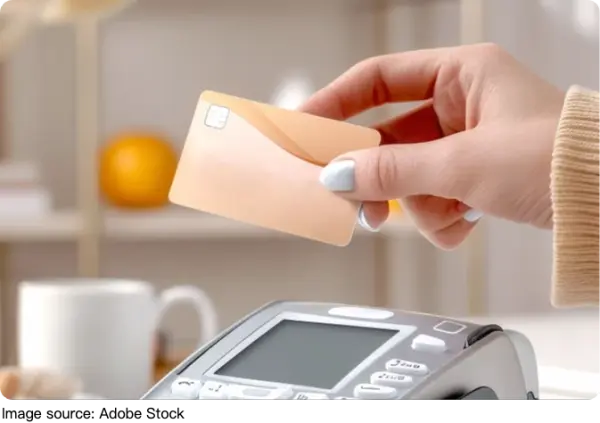
A card tap at a terminal may look like an ordinary retail moment, yet it captures a wider finance story: consumers still value choice, but card preference now shapes everyday checkout in a durable way. Cards lead the lane and cash backs it up — and the data shows that gap continuing to widen. Businesses that understand this shift and design their payment experience around it will be better positioned for the next phase of consumer finance.