Can Habits Protect Teeth?

Maya
| 11-09-2026
 · News team
Hello, everyone. Children’s health improves when daily cleaning, food choices, and preventive dental visits support one another from the first teeth onward. Cavities develop when mouth bacteria use sugars from food and drinks and produce acids that weaken tooth enamel.
Repeated exposure gives the tooth surface less time to recover, especially when cleaning is inconsistent. Prevention is therefore not one action completed at the dentist’s office. It is a home routine that combines brushing, sensible eating patterns, water, supervision, and professional checks suited to the child’s age.
Brush With Enough Support
Children should brush twice a day with fluoride toothpaste, using a soft, child-sized toothbrush. Caregivers need to help until the child has the coordination to clean every surface reliably. For children younger than six, current U.S. public-health guidance advises supervision and a pea-sized amount of toothpaste, with the child spitting it out rather than swallowing. Younger children may require different instructions from their dentist or pediatrician.
How to measure blood pressure correctly, understand your readings, and support healthy levels
How cycling supports cardiovascular fitness, heart-rate control, and safe exercise
How wearable sensors track heart rate, ECG patterns, oxygen levels, activity, sleep, and other health measurements
How sufficient, regular sleep supports brain function, emotional well-being, immune health, metabolism, and cardiovascular function
The UK economy expanded again in the second quarter of 2026, but growth slowed from the pace recorded at the start of the year.
Millions of UK drivers could be eligible for compensation over car finance deals, depending on how commissions were disclosed.
Use small gentle movements along the outer, inner, and chewing surfaces, including the back teeth where grooves collect food. Brushing quickly across the front teeth leaves important areas untouched. A mirror and the same order each time can make missed surfaces easier to notice. Replace a worn toothbrush, and store brushes so they can air-dry without touching one another. Cleaning between teeth should follow the child’s dental guidance once neighboring teeth touch.
Reduce Frequent Sugar Exposure
Sugar matters because bacteria convert it into acids, but frequency also affects risk. A sweet item eaten slowly over a long period, or repeated sugary drinks between meals, can create many acid-producing periods. Keep sweet foods and drinks limited and serve them with a meal when possible, then return to water instead of extending the exposure. Water is a practical everyday drink, and fluoridated tap water can provide additional cavity protection where local supplies contain the recommended level.
Offer snacks such as fresh fruit, vegetables, plain yogurt, cheese, eggs, beans, or whole-grain foods when these choices match the child’s age and dietary needs. Sticky sweet products can remain on teeth, while frequent sipping keeps sugar in contact with the mouth. Check ingredient labels because flavored milk, packaged snacks, and drinks may contain added sweeteners even when their packaging sounds nutritious.
Use Predictable Home Cues
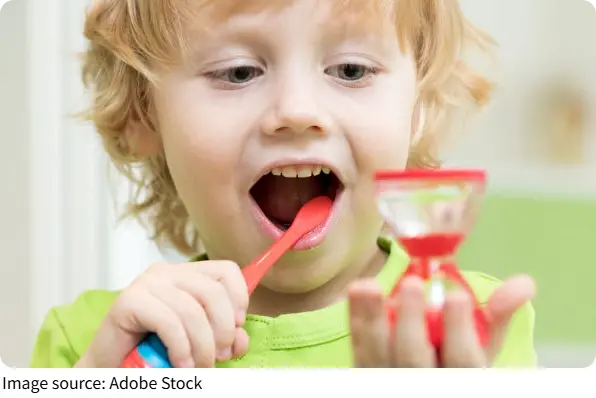
Attach brushing to two stable parts of the day, such as after breakfast and before bed. The bedtime cleaning is especially easy to protect when it happens before the child becomes very tired. Keep the toothbrush, toothpaste, and a small timer ready in one place, with supplies positioned beyond the reach of unsupervised young children. A caregiver can brush first, then allow the child a short independent turn so practice grows without replacing thorough cleaning.
Avoid using brushing as a punishment after sweet foods. Present it as normal personal care, and praise careful technique rather than a bright appearance. If mornings are rushed, move wake-up time slightly or prepare school items the night before instead of shortening the brushing period. A visible checklist can help older children remember, but periodic observation remains useful until their technique is dependable.

Keep Preventive Visits
U.S. guidance recommends a first dental visit by the first birthday, followed by care on the schedule advised for the child. Dental professionals can identify early changes, review brushing technique, and decide whether fluoride varnish or sealants are appropriate. These services add protection but do not replace daily cleaning and food choices. Families should share the child’s medical history, current dental products, and any difficulty completing the home routine.
Do not wait for a routine appointment if a child has ongoing tooth pain, swelling, a broken tooth, or signs of infection. Seek prompt professional advice and follow the instructions provided for that child. A dentist can also adjust recommendations for cavity risk, braces, dry mouth, enamel differences, or limited hand coordination. General advice should not replace an individual examination.
Children’s teeth benefit most when families make prevention consistent rather than complicated. Supervised brushing, fewer repeated sugar exposures, suitable water, and timely dental care create a practical daily routine that can be adjusted as skills, schedules, and needs change through each stage of childhood.