Your Money's Journey

Owen Murphy
| 20-10-2026
 · News team
Hello, Lykkers! Have you ever tapped your card at a coffee shop, heard that little "beep," and just assumed your money magically vanished into the cash register? It actually does something far more fascinating.
That single "beep" kicks off a highly orchestrated, high-speed digital relay race that spans across the globe before your barista even hands you your cup. Most people think the transaction is over when the screen flashes "Approved," but that is just the starting line.
The "Hold" Phase: Authorization
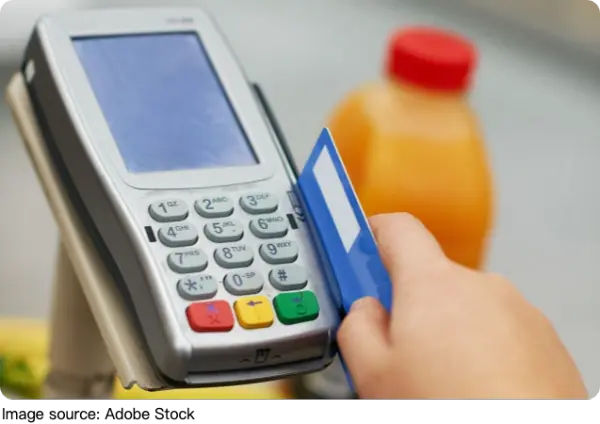
Think of authorization as a temporary reservation, not an actual transfer of money. When you tap or insert your card, the merchant's terminal immediately sends a digital message through a card network (like Visa or Mastercard) to your bank.
The 'Boring' Tech That's Quietly Ending Human Control Over Finance—And Why You Should Be Scared (Or Excited)!
What Rural Communities Are Doing That Urban Economies Can't!
One Wrong Download Could Cost You Everything—Are You Using These Fake Apps?
Stop Chasing Stocks: The Wealth-Building ETF Strategy Everyone Misses!
How Currency Appreciation Can Unlock New Growth for Export Businesses!
The Surprising Ways Bitcoin Wallets Earn Revenue Beyond Crypto Storage!
Your bank checks your available balance, scans for fraud, and sends back a simple "Yes" or "No" in a fraction of a second. If it says "Yes," your bank places a temporary hold on those funds. This means that money is still in your account, but it is gently "frozen" in place so you can't accidentally spend it twice before the merchant gets paid.
The Green Light: Capture
Now that your bank has given the thumbs up, the merchant needs to officially grab the money. This next step is called "Capture." For a simple coffee purchase, the capture is usually submitted shortly after authorization, although the timing depends on the merchant’s payment setup. However, if you rent a car or check into a hotel, the merchant might authorize an amount on day one, but not "capture" the final bill until you return the vehicle or check out. If the merchant never sends a capture signal, the "hold" on your bank account simply evaporates after a few days, and you are never charged.
The Paperwork Parade: Clearing
Here is where the magic gets seriously technical. After the day is done, your neighborhood café doesn't have to walk to your bank with a stack of receipts. Instead, the merchant's bank (called the acquirer) gathers up millions of transactions from thousands of businesses and bundles them into massive "clearing files." These files are sent to the card networks. This step is strictly a data exchange—it is the "paperwork parade" that tells the networks exactly who owes whom. It is important to know that absolutely no actual money moves during this phase.
The Final Finish Line: Settlement
Finally, the actual money moves. The card network calculates the net difference between what all the different banks owe each other. Then, the merchant's bank receives the funds and deposits them into the store's account. But here is the catch: The merchant rarely gets the full amount you paid. The bank deducts "interchange fees" and processing costs before the money hits their account. This is why it takes a day or two for a small business owner to see the cash from your weekend purchase.
As Piero Cipollone, a member of the European Central Bank’s Executive Board, explains, “the merchant pays what is called a ‘merchant service charge’ to the acquiring bank for processing the payment.” Part of that charge can be passed on to the issuing bank as an interchange fee. For small businesses, these costs can reduce already-thin margins.
The Silent Guardian: Security
Throughout this entire two-day journey, security is the invisible bodyguard. Every data packet sent between the terminal and the bank is heavily encrypted. The payment systems are built like complex digital ledgers, designed to be traceable and reconstructable. This ensures that if a transaction fails halfway through, the system can safely retry it without accidentally charging you twice.
Final Thoughts
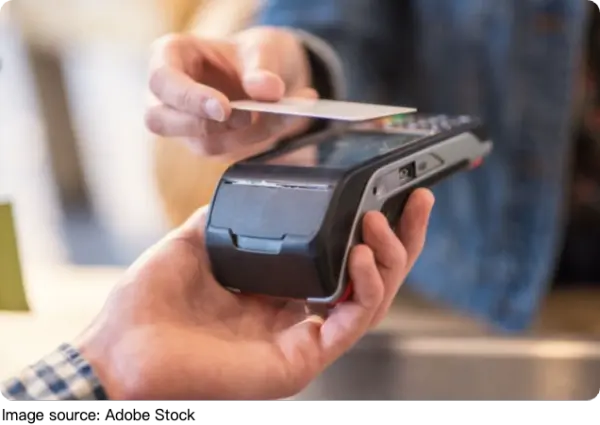
So, the next time you hear that "beep" and see the green light, you'll know the full story. It isn't just a simple tap; it is a carefully choreographed digital dance of holds, clearings, and settlements that keeps the entire global economy moving—all in the time it takes to say "thank you." The machinery is built, the rules are set, and your money travels further in two seconds than you probably do in a day.