Dollar & Bitcoin Crossroads

Simone
| 15-09-2026
 · News team
Bitcoin and the U.S. dollar represent two very different approaches to money and financial value. The dollar remains deeply integrated into banking, trade, investment, and international finance, whereas Bitcoin operates on a decentralized digital network with a predetermined supply.
Their growing interaction creates an important financial crossroads, not necessarily because one must replace the other, but because digital assets are changing how value can be stored, transferred, and accessed.
Two Different Models of Money
The dollar operates within a conventional monetary system supported by banks, payment networks, financial markets, and central-bank infrastructure. Its usefulness extends beyond physical cash, as dollar-denominated deposits, securities, loans, and payment systems collectively form a broad financial ecosystem.
What will shape investing next? New technologies, shifting markets, and fresh strategies are changing the game!
Health alerts may help teens and young adults recognise online risks and cut back on social media use.
New research shows that metabolism and physical cell signals help guide the earliest stages of human brain development.
Mortgage costs remain high as inflation and volatile energy prices reduce the chances of a near-term UK rate cut.
Essential nursing practices that support safer patient care and help reduce infection risks
Simple mental wellness practices may improve blood pressure and support cardiovascular health within weeks.
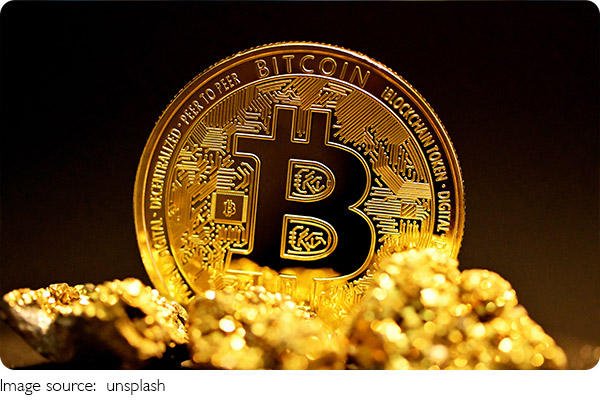
Bitcoin follows a fundamentally different model. Transactions are recorded on a distributed blockchain, allowing value to move between digital wallets without relying on the centralized infrastructure used by conventional banking. Its supply is governed by the Bitcoin protocol rather than discretionary monetary decisions.
The Dollar Benefits From a Deep Financial Network
One of the dollar's greatest strengths is the financial infrastructure surrounding it. Businesses can conduct transactions through established banking systems, while investors can access a wide range of dollar-denominated assets.
The dollar's role is reinforced by network effects. When businesses, financial institutions, and investors already use a particular currency extensively, additional participants have strong incentives to use the same currency because it is widely accepted and easily exchanged.
The International Monetary Fund has described the dollar as the dominant international reserve currency, supported by its extensive use in trade invoicing, cross-border investment, and international financial markets.

Bitcoin Introduces a Different Financial Infrastructure
Bitcoin's significance comes partly from its underlying technology. A blockchain can maintain a shared record of transactions without requiring a single institution to control the ledger. This structure creates a payment and settlement network that can operate continuously. Digital wallets can hold and transfer Bitcoin, while cryptographic verification provides the mechanism for validating transactions.
The model has also influenced wider financial innovation. Distributed-ledger technology is now being studied for applications involving payments, securities, and financial settlement. The Bank for International Settlements has highlighted tokenization and unified digital ledgers as potential developments for the next generation of financial infrastructure.
Bitcoin's Volatility Remains a Major Difference
A major distinction between Bitcoin and the dollar is price stability. The dollar is the unit in which many financial contracts, wages, goods, and services are denominated. Bitcoin's market value can fluctuate substantially, making it more difficult to use as a stable unit of account.
This characteristic limits Bitcoin's ability to function like conventional money for everyday transactions. A payment received in Bitcoin may have a different value when converted into dollars or another currency, creating exchange-rate exposure for the recipient.
Digital Finance Is Bringing the Two Systems Closer
The financial crossroads becomes particularly interesting as traditional and digital financial systems increasingly interact. Bitcoin can be accessed through financial platforms, while blockchain technology is influencing the development of new payment and settlement systems.
Dollar-denominated digital assets are another important example. Stablecoins generally seek to maintain a value linked to a fiat currency, particularly the dollar, combining blockchain-based transfer mechanisms with a familiar unit of account.
Expert Insight
Agustín Carstens, General Manager of the Bank for International Settlements, discussed the continuing development of digital forms of money and payment systems. In a BIS publication, Carstens stated: “The bitcoin hype is over but attempts to create new forms of money or to engineer new ways to pay still appear almost weekly.”
A Future of Coexistence Rather Than Replacement
The financial crossroads between Bitcoin and the dollar is therefore better understood as a period of technological and financial evolution. The dollar possesses extensive infrastructure, liquidity, and established use, while Bitcoin offers a distinct decentralized model for transferring and storing digital value.
Bitcoin and the dollar represent different models that are increasingly interacting within the broader financial system. The dollar benefits from established institutions, deep markets, and extensive international usage, while Bitcoin introduces decentralized infrastructure and a new approach to digital ownership and transfer.
The crossroads does not necessarily point toward one system replacing the other. Instead, it highlights a financial environment in which traditional money, digital assets, and blockchain technology are increasingly connected, creating new possibilities while preserving important differences in stability, infrastructure, and risk.