Skiing Skills Basics

Rafael
| 30-09-2026
 · News team
learning to ski on two skis can feel challenging at first, but the basics become much easier when we focus on balance, speed control, turning, and safe habits.
Instead of trying to move quickly right away, beginners can build confidence by learning how to stand correctly, stop smoothly, turn with control, and respond calmly when something goes wrong. With steady practice, these simple skills can make time on the slopes more comfortable and enjoyable.
Start With a Stable Position
A good skiing position begins with balance. Stand with your feet roughly hip- to shoulder-width apart and keep your knees slightly bent. Your ankles and knees should stay flexible rather than locked, allowing your legs to respond to changes in the snow.
Why Every Fund Is Starting to Look the Same, and What That Means for Your Money!
Could Bitcoin Actually Power the Cities of Tomorrow?
Discover simple daily practices that support personal hygiene, healthy routines, and a more comfortable lifestyle
How babies express feelings through early signals, behaviors, and interactions
How regular health visits help parents understand growth, development, habits, and everyday well-being
Understanding psychological responses to workplace demands and developing healthier coping strategies
Keep your upper body relaxed and look ahead instead of constantly watching the skis. Your weight should remain centered over the skis. Leaning too far backward can make the skis difficult to control, while staying balanced over the middle gives you more room to adjust.
When moving on flat snow, take small steps and keep the skis under control. Beginners should first become comfortable with standing, stepping, and gliding before attempting faster movements.
Learn How to Stop
Being able to stop is one of the most important skills for any beginner. A common starting technique is the snowplow, sometimes called the wedge. Move the ski tips closer together while allowing the tails to move farther apart. This creates a wide V shape.
Use the inside edges of the skis to create resistance against the snow. The wider the wedge, the more control you can usually create over your speed. Practice this on a gentle slope where you have plenty of space.
The goal is not simply to stop suddenly. Beginners should learn to reduce speed gradually and stay balanced while doing so. Once slowing down feels natural, it becomes easier to move on to basic turns.
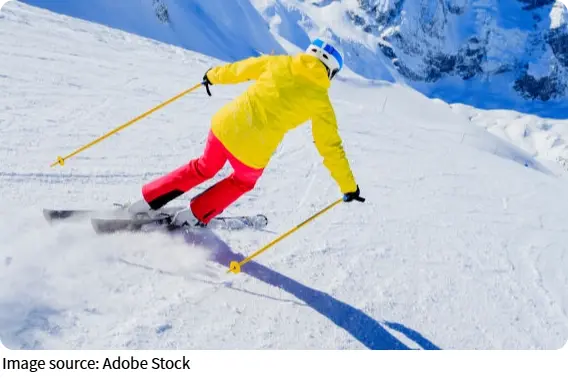
Build Basic Turning Skills
Turning allows you to manage both direction and speed. Start with gentle turns using the snowplow position. As you move across the slope, shift your balance smoothly from one side to the other.
Avoid twisting your upper body sharply. Instead, allow your legs and skis to guide the movement while your shoulders remain relatively stable. Keep looking toward the direction you want to travel.
As your confidence improves, the skis can gradually become more parallel during turns. This takes more balance and edge control, so there is no need to rush. Practicing controlled turns on an easy slope is more useful than attempting difficult terrain too early.
Know How to Fall Safely
Falls are a normal part of learning to ski. When you feel that you are losing control, trying to remain upright at all costs can sometimes make the situation harder.
If a fall becomes unavoidable, try to fall toward the side rather than directly forward. Keep your hands and arms in a protected position and avoid reaching out sharply with your hands to break the fall.
After falling, first check your surroundings. If it is safe to move, position your skis across the slope before standing. This can help prevent an immediate slide once you get back up.
Use the Right Safety Habits
Proper equipment and responsible behavior matter as much as technique. A well-fitting helmet is an important part of basic protection. Beginners may also consider additional protective equipment suited to their experience and skiing conditions.
Choose clothing that keeps you warm while allowing comfortable movement. Several manageable layers can be easier to adjust than one very heavy layer.
On the slope, always control your speed according to your ability and surroundings. Give other skiers enough space, especially when approaching from behind. Avoid stopping in the middle of a trail or in places where other skiers cannot easily see you.
Final Thoughts
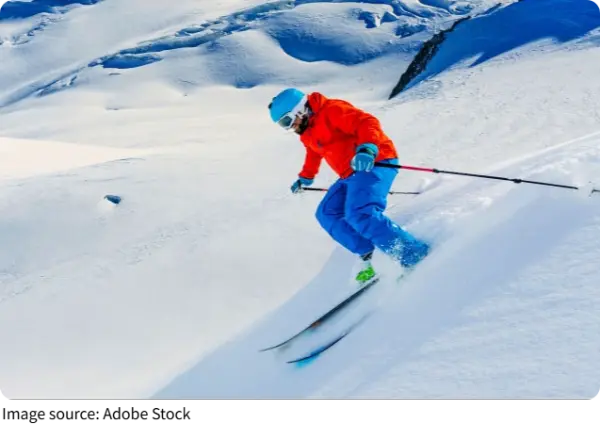
Good skiing is built through control rather than speed. Start with a stable stance, practice stopping, develop simple turns, and learn how to respond safely to falls. As these movements become familiar, more advanced techniques will feel easier to learn. Most importantly, choose terrain that matches your current ability and give yourself enough time to improve. A calm, controlled approach can make every skiing session more enjoyable.
How to maintain balance on skis
Video by Inspirational Skiing