Farm Investment Planning

Chris Isidore
| 14-10-2026
 · News team
Farm investment planning is one of the most important but often overlooked parts of agricultural economics.
It is not just about spending money on seeds, machines, or fertilizers. It is about making structured financial decisions that determine how productive, stable, and resilient a farm will be over time. At its core, it is the economics of turning limited resources into future harvest value.

Understanding the economics behind farm decisions
Every farm investment decision involves a trade-off. Farmers must decide how to allocate limited capital across competing needs such as irrigation systems, improved seeds, machinery, storage, or labor.
These choices are not random. Economist Vernon Ruttan of the University of Minnesota, in his book Agricultural Development: An International Perspective, written with Yujiro Hayami, showed that farmers respond to whichever resource is scarcer, such as land or labor, and invest in technologies that save it. Investment decisions evolve with economic pressures and the technologies available.
How maintaining fluid balance supports essential body functions and helps prevent dehydration
How automatic payments, savings transfers, and regular investing can help build better financial habits with less daily effort
A closer look at the financial pressures, technological changes, and energy decisions shaping a competitive global industry
How leverage, systems, and positioning help extra earnings grow without more hours.
How financial models, alternative data, and changing market conditions are reshaping the way investors assess companies
Can Europe’s banks keep pace with global rivals? New measures aim to strengthen the sector!
What makes agriculture unique is that these decisions are highly sensitive to uncertainty. A farmer might invest heavily before a planting season, but the final return depends on weather conditions, market prices, pest risks, and input costs. This makes agricultural investment planning fundamentally different from most other business decisions.
The goal is not only to maximize profit but also to maintain balance between risk and return. A well-planned farm investment system ensures that productivity improves without exposing the farmer to excessive financial vulnerability.
Timing and return cycles in farming
Unlike many industries where returns can be immediate, agricultural investments often follow seasonal or multi-season cycles. This means that money spent today may only show results months or even years later.
For example, investments in soil improvement or irrigation systems may not immediately increase output, but they significantly improve long-term productivity. On the other hand, short-term inputs like fertilizers or pesticides are aimed at optimizing a single harvest cycle.
This creates a layered economic structure where farmers must balance short-term survival with long-term growth. Poor timing of investments can reduce yields, while well-timed investments can significantly increase efficiency and profitability.
Risk, uncertainty, and financial resilience
Agriculture is one of the most risk-exposed sectors in the economy. Weather changes, climate variability, price fluctuations, and pest outbreaks can all affect returns.
Because of this, farm investment planning must include risk management strategies. Farmers often reduce risk through crop diversification, insurance systems, or flexible financial planning. These approaches help stabilize income even when conditions are unpredictable.
From an economic perspective, reducing risk is just as important as increasing output, because stability allows for continuous reinvestment and long-term growth.
Financial access and its role in farm growth
One of the biggest constraints in farm investment planning is access to capital. Many farmers, especially smallholders, face limited financial resources, which restricts their ability to invest in productivity-enhancing tools.
When financial systems such as rural credit, cooperative lending, or agricultural loans are accessible, farmers can invest more effectively in long-term improvements. This increases output potential and reduces vulnerability to shocks. Without adequate financing, even the best investment plans remain unrealized, limiting agricultural development.
Long-term economics of smarter farming
Modern farm investment planning is increasingly focused on sustainability and efficiency. Investments that improve water usage, soil quality, and climate resilience are becoming more important than ever.
While these investments may not always generate immediate financial returns, they reduce long-term risks and stabilize production over time. Economically, this shifts farming from reactive decision-making to proactive financial planning.
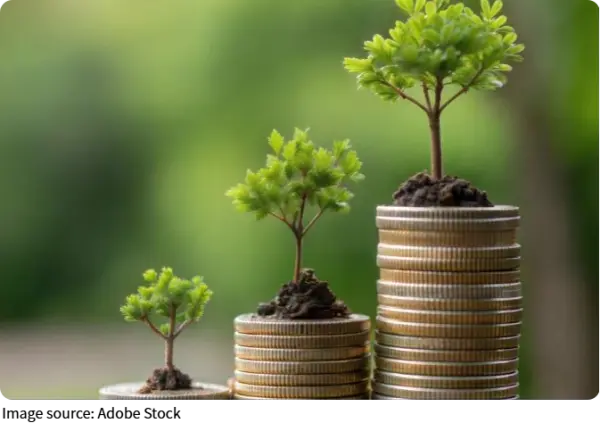
The economics of farm investment planning is about making strategic decisions under uncertainty. It requires balancing short-term needs with long-term productivity, managing risk, and ensuring access to financial resources.
When done effectively, it transforms agriculture from a survival-based activity into a structured, growth-oriented economic system.