What Drives Bitcoin's Value

Tessa
| 19-10-2026
 · News team
Bitcoin began as a niche experiment for tech enthusiasts and has grown into one of the most widely traded financial assets in the world.
It is often referred to as "Digital Gold" because only a finite amount will ever exist, while traditional paper money can be issued in ever larger quantities.
Its rise in value is not just a trend. It is driven by a blend of mathematical scarcity, institutional adoption, and a shift in how people perceive the concept of value.
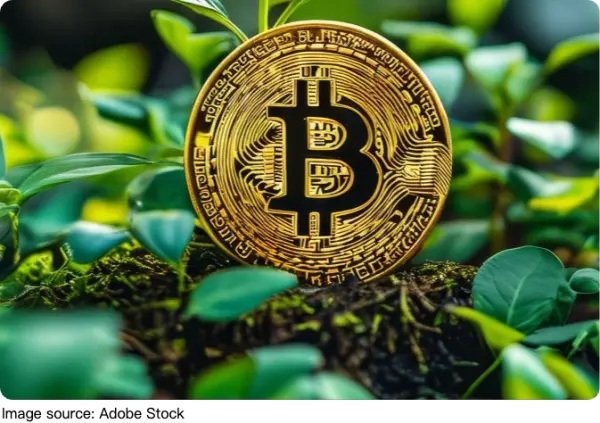
The Power of Mathematical Scarcity
Unlike traditional currencies that central banks can expand at will, the supply of Bitcoin is hard-coded into its software. Only 21 million units will ever be created. This fixed limit is the main engine behind its long-term value.
How ESG scores, green bonds, and five portfolio strategies help investors seek returns responsibly.
How individuals trading their own money add momentum and liquidity to rising markets, and the risks involved.
Discover simple daily habits that encourage relaxation, emotional well-being, restful sleep, and a more balanced lifestyle
A senior ECB official warns that raising financial charges on commercial banks could create unexpected risks.
EU finance ministers have agreed on sweeping changes to financial market supervision, aiming to make investing across Europe easier.
The world economy remains resilient, but rising energy costs and tighter monetary policy could threaten growth in 2027.
In his institutional analyses of digital capital, Michael Saylor highlights that Bitcoin represents the world's first mathematically perfected store of value. Saylor emphasizes that because the 21 million supply cap is enforced by immutable code rather than human policy, Bitcoin functions as "digital energy"—an asset capable of preserving purchasing power across space and time without the inflation risk, storage friction, or decay inherent in physical assets and fiat currencies.
In economics, when demand holds steady or increases while supply is strictly limited, the price tends to rise. That does not guarantee gains, but it explains why scarcity sits at the center of the case for this asset.
Furthermore, about every four years, the rate at which new units are issued is cut in half, an event known as "the halving." New units are "mined," which means earned by computers that process and confirm transactions, so each halving makes them harder and more expensive to produce.
This programmed reduction creates a recurring supply shock, and existing units become scarcer relative to demand. Supporters therefore see Bitcoin as a hedge against the loss of purchasing power that affects paper currencies during inflation.
Institutional Adoption and Legitimacy
For years, the professional financial world viewed this asset with skepticism. Much of that doubt has faded. Today, large asset managers, along with some pension funds and insurance companies, are adding it to their portfolios.
This flow of institutional money brings a level of demand and stability that was hard to imagine in the early years. Professional interest is growing for several reasons:
- Portfolio diversification: It has often shown a low correlation with traditional stocks and bonds, which can help balance risk.
- Standardized investment vehicles: The approval of specialized funds and exchange-traded products lets traditional investors gain exposure without managing complex digital keys.
- Corporate treasury reserves: Some listed companies have moved part of their cash reserves into this digital asset to protect their balance sheets from inflation.
- Payment integration: Global payment processors and credit card companies are integrating its technology, allowing transfers across the globe.
A Shield Against Global Instability
In times of economic uncertainty or high inflation, investors look for a "safe haven," an asset expected to hold its value. Traditionally, this was gold. The digital version offers some advantages over the yellow metal.
It is weightless, can be sent across the planet far faster and more cheaply than physical metal, and is easily divisible into tiny fractions. In regions where the local currency is losing value or access to banking is limited, it can serve as an alternative way to store and move money.
Supporters call this "financial sovereignty," meaning direct control over one's own money. Because Bitcoin operates on a global, peer-to-peer network without a central authority, it remains accessible to anyone with an internet connection. That neutrality adds to its appeal as a reserve asset.
The Network Effect and Security
Metcalfe's Law states that the value of a network is proportional to the square of the number of its users. This helps explain why Bitcoin becomes more valuable as more people adopt it. Every new wallet and every merchant that accepts it as payment strengthens the ecosystem.
Security is the final pillar of its value. The underlying technology relies on a massive, distributed network of computers that keeps a shared ledger, or record of every transaction. It is widely regarded as one of the most secure computing networks in operation.
To "hack" or alter that ledger would require more energy and hardware than is practical for any single organization. This security provides the trust needed for billions of dollars to flow into the system.
Volatility remains a characteristic of this young market, and prices can fall sharply as well as rise. Anyone considering Bitcoin should look past short-term price moves, check whether supply, institutional demand, and network security still hold, and treat it as one part of a diversified portfolio rather than a guaranteed store of wealth.