Bitcoin's First Principle

Pardeep Singh
| 27-01-2026
 · News team
Hey Lykkers! Ever heard someone call Bitcoin "digital gold" or the future of money? That idea hinges on an old, powerful concept that most of us have never had to think about: sound money. We're so used to government-issued cash that we forget money itself can have good qualities or bad ones.
So, let's break down what makes money "sound" and why Bitcoin's biggest believers think it's the first truly sound money of the digital age.
So, What Is "sound money"?
Imagine money as a measuring stick. A good measuring stick shouldn't change length depending on who's holding it or what year it is. Sound money is exactly that—a stable, reliable measuring stick for value. It’s not about the price staying the same; it’s about its core properties being unchangeable and trustworthy.
Why Your Country's GDP is the Greatest Story Ever Sold!
Your Bank is About to Change Its Name—Here's What They're Not Telling You.
Routines matter? Emotions feel intense?! Learn how daily life can look and feel!
Market Crash? Parents Are Using It to Build Kids’ Wealth Faster—Here’s the Simple System
Getting older, feeling better! Do daily habits really slow aging? Energy, balance, joy grow with time!
Feelings fade without words! Listening deeper saves bonds? Small talks build strong love!
Historically, sound money had a few golden rules:
1. Durability: It doesn't rot or rust (think gold coins, not seashells).
2. Portability: You can move it easily (a problem with gold bars).
3. Divisibility: You can split it into small units for small purchases.
4. Scarcity (The Most Important One): It can't be created out of thin air in unlimited amounts. Its supply is limited and predictable.
This scarcity is the key. When money is scarce, it holds its value over time. You can save it, and it won't melt away in your pocket. This is the opposite of what happens with unsound money—just ask anyone who's lived through hyperinflation, where cash becomes less valuable than the paper it's printed on.
The Unsound Money We Live With
Our current system uses fiat currency—the dollars, euros, and pesos in your bank account. It's "money" because the government says it is (that's the "fiat"). The critical flaw, according to sound money advocates, is that a central authority can create more of it whenever they want.
As Milton Friedman famously said, "Inflation is always and everywhere a monetary phenomenon". This is why your grandparents could buy a house for what now feels like pocket change. The measuring stick got shorter.
Enter Bitcoin: The Digital Measuring Stick
This is where Bitcoin makes its grand claim. Its creators designed it to emulate and improve upon the properties of sound money like gold, but for the internet age.
Digital Durability: It exists on an immutable, global ledger. It can't be destroyed.
Ultimate Portability: A billion dollars' worth can be sent anywhere with an internet connection.
Perfect Divisibility: It's divisible down to 0.00000001 BTC (a satoshi).
Algorithmic Scarcity: This is the masterstroke. The Bitcoin protocol has a hard cap of 21 million coins. No government, company, or individual can change this. New coins are created at a predictable, slowing rate through mining until the cap is hit around the year 2140.
The Trade-Offs and The Skeptics
Of course, the claim isn't without controversy. Critics point out that Bitcoin's volatility makes it a poor medium of exchange right now—you don't want the price of a loaf of bread to swing 10% daily. Its "soundness" is purely digital, reliant on code, electricity, and network consensus, not a physical element.
Furthermore, traditional economists like Paul Krugman have argued that a completely inflexible money supply could hinder economic policy responses during crises, where increasing money supply can be a tool to stimulate activity.
The Bottom Line for You, Lykkers
The "sound money" debate is ultimately about trust and time. Do you trust a human institution to manage the money supply responsibly over decades? Or do you trust a transparent, predictable, and unchangeable algorithm?
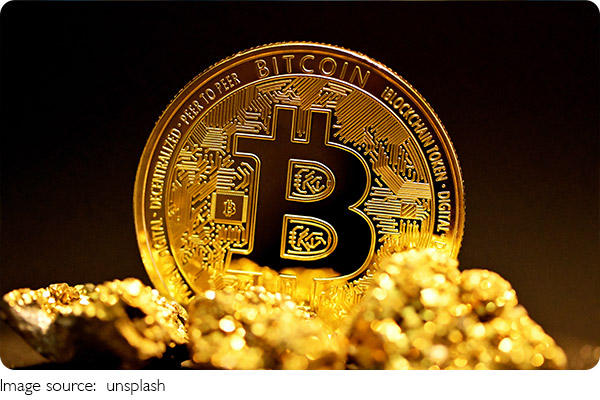
Bitcoin's claim isn't that it's a perfect currency today. Its claim is that it offers a superior store of value over the long term because its rules cannot be broken. It's an experiment in creating a monetary system based on mathematics rather than human discretion or centralized authority.
In a world of endless quantitative easing and rising national debts, that's a claim worth understanding, whether you're a Bitcoin believer or just a curious observer. It forces us to ask a fundamental question: What should our measuring stick for value really be made of?