Real Estate Markets

Owen Murphy
| 30-03-2026
 · News team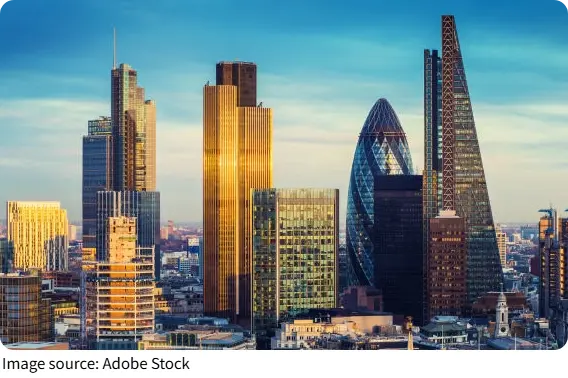
Hello, Lykkers! Look at any major global city today, and you're not just seeing architecture—you're witnessing a marketplace.
From New York to London to Tokyo, cities have become financial assets, attracting and losing capital in patterns that increasingly resemble stock market behavior.
Cities as a Global Investment Asset
Real estate has long been considered a local investment, shaped by neighborhood dynamics and domestic demand. But over the past two decades, that perception has shifted dramatically. Today, large volumes of capital move across borders into property markets, driven by institutional investors seeking stable returns.
Pension funds, sovereign wealth funds, and private equity firms now treat cities as strategic allocations in a global portfolio. Instead of focusing on a single country, they compare cities across continents, evaluating them based on growth potential, stability, and liquidity.
How Nanotech is Powering the Future of Solar Energy
Most Buyers Skip This—And It Costs Them Everything in the Long Run
Silver vs. Gold: Which Metal Actually Wins When Inflation Hits?
Most Investors Do This Wrong — And It's Not What You Think
The Secret Behind Every Profitable Investment Decision Revealed
Oil Prices Up, Down, Sideways — Here's the Logic the Headlines Never Tell You
Why Investors Move Between Cities
The logic behind global real estate investment is surprisingly similar to stock market strategies. Three forces consistently drive capital flows across borders.
• Diversification – By investing in multiple cities, investors reduce their exposure to any one economy. If one market slows down, another may continue to grow.
• Yield-seeking – When returns compress in established markets, capital often flows into emerging or recovering cities where higher returns are possible.
• Macroeconomic factors – Interest rates, inflation, and currency movements strongly influence where money goes. A favorable exchange rate or a stable regulatory environment can quickly make one city more attractive than another.
The Rise of "Global Cities"
Not all cities compete equally for investment. A small group consistently attracts the majority of global capital.
Cities like London, New York, Paris, and Tokyo are often viewed as "safe havens." They offer transparency, strong legal systems, and deep, liquid property markets. In many ways, they function like blue-chip stocks—reliable, widely understood, and easier to enter or exit.
At the same time, rising cities in Asia, the Middle East, and parts of Europe are gaining attention as growth opportunities, much like emerging market equities.
Do Cities Move Like Stocks?
While real estate doesn't trade as quickly as equities, the underlying patterns can look surprisingly similar.
Capital flows tend to follow cycles. When confidence is high, investors pour money into certain cities, driving up prices and development activity. When uncertainty rises—due to economic slowdowns, regional tensions, or regulatory changes—investment can slow or reverse.
This creates momentum effects. Some cities become "hot markets," attracting waves of capital, while others fall out of favor, at least temporarily.
Expert Insight
Dr. Nikodem Szumilo, a real estate finance economist, said that global investors increasingly prioritize transparency and liquidity when choosing where to invest, often favoring well-established markets over riskier but potentially higher-return locations.
This insight helps explain why capital repeatedly flows back into the same major cities, even after periods of decline.
The Hidden Risks
Treating cities like tradable assets is not without consequences.
Large inflows of international capital can push property prices higher, sometimes faster than local incomes can keep up. This can lead to affordability challenges for residents and increase the risk of speculative bubbles.
There is also the issue of liquidity. Unlike stocks, real estate transactions take time, and exiting a market during a downturn is not always straightforward. Investors must balance the appeal of steady income with the reality of slower adjustments.
The Future of City Investing
Technology is making global real estate even more data-driven. Investors now have access to detailed analytics on everything from rental yields to demographic trends, allowing them to compare cities with greater precision.
As a result, decision-making is becoming faster and more systematic, further reinforcing the idea of cities as components in a broader financial portfolio.
Final Thoughts
For Lykkers, the key takeaway is clear: cities are no longer just places—they are assets competing for global capital. As investment strategies evolve, the lines between real estate and financial markets continue to blur. Understanding how and why money moves between cities can offer valuable insight into both property trends and the broader global economy.