The Global Bitcoin Shift

Kai
| 16-09-2026
 · News team
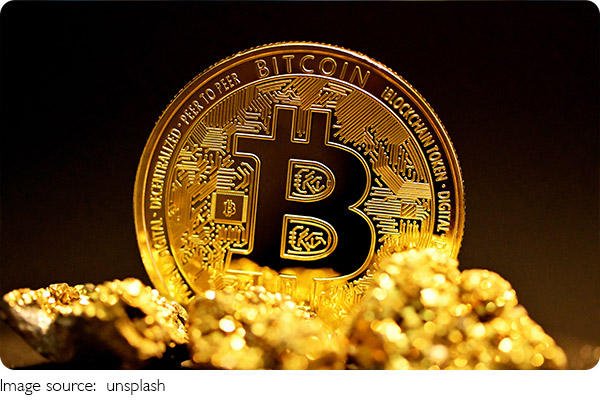
Bitcoin has introduced a different way of transferring value across borders by using a decentralized blockchain network rather than relying entirely on conventional financial intermediaries.
Its ability to operate continuously and transfer digital assets internationally has attracted attention in discussions about faster and more accessible payments.
Reducing Dependence on Traditional Payment Chains
International payments can involve several institutions, including banks, payment providers, and foreign-exchange services. Each participant can add processing steps, fees, and waiting periods, particularly when different currencies and financial systems are involved.
Bitcoin provides an alternative settlement network. A transfer can be initiated directly between digital wallets without requiring the same chain of correspondent banks used in conventional international transactions. The Bitcoin network operates continuously, meaning transactions do not depend on banking hours or the opening schedules of individual financial institutions.
One careless click can cause trouble! Learn practical ways to make digital finances safer every day!
Evidence-Based Strategies for Walking, Balance, Strength, and Mobility
Bitcoin and the dollar are taking different paths! What could this mean for global finance?!
What will shape investing next? New technologies, shifting markets, and fresh strategies are changing the game!
Health alerts may help teens and young adults recognise online risks and cut back on social media use.
New research shows that metabolism and physical cell signals help guide the earliest stages of human brain development.
This structure can be useful for certain international transfers, particularly when conventional payment channels are inconvenient or difficult to access. However, Bitcoin transactions still require confirmation on the blockchain, and the overall experience can depend on network conditions and the services used to convert Bitcoin into local currency.
Blockchain Creates a Shared Transaction Record
One important feature behind Bitcoin's payment model is its blockchain. Transactions are recorded on a distributed ledger maintained across a network rather than on a single centralized database.
This structure provides a transparent transaction history while reducing the need for separate institutions to maintain and reconcile completely independent records. Once a transaction receives sufficient confirmation, the record becomes extremely difficult to alter retroactively.
The underlying technology has also influenced broader financial innovation. The Bank for International Settlements notes that distributed-ledger technology and tokenisation could potentially reduce reconciliation requirements and improve cross-border settlement processes.
International Transfers Can Operate Around the Clock
Traditional international payments may be affected by banking hours, weekends, holidays, and differences between payment infrastructures. Bitcoin operates on a continuously functioning network, allowing transactions to be submitted at any time.
This feature can be particularly relevant for digital commerce and international transfers where timing matters. A payment does not have to wait for a bank branch or traditional clearing window before entering the Bitcoin network.
The advantage is primarily technological rather than a guarantee of lower costs. Network fees can vary according to transaction demand, while converting Bitcoin into another currency can introduce additional expenses. A meaningful comparison therefore needs to consider the entire payment process rather than only the blockchain transaction fee.
Bitcoin Can Support Alternative Payment Access
Another potential benefit is accessibility. Bitcoin can be held and transferred through digital wallets without requiring the same type of conventional banking relationship used for many international payments.
This characteristic can create another pathway for individuals and businesses participating in international commerce. The International Monetary Fund has noted that unbacked crypto assets, including Bitcoin, have been used for cross-border transactions, although their significant price volatility limits their effectiveness as conventional money.
For businesses, this distinction is important. Bitcoin can function as a transferable digital asset, but exchange-rate exposure remains a significant consideration when the recipient ultimately needs a conventional currency.
Benoît Cœuré, former Executive Board member of the European Central Bank and former Head of the BIS Innovation Hub, discussed the broader technological impact of Bitcoin and blockchain on payments. In a BIS interview, Cœuré stated: “technologies exist that can transform the world of payments and currencies, and these technologies should be incorporated.”
Important Limitations Remain
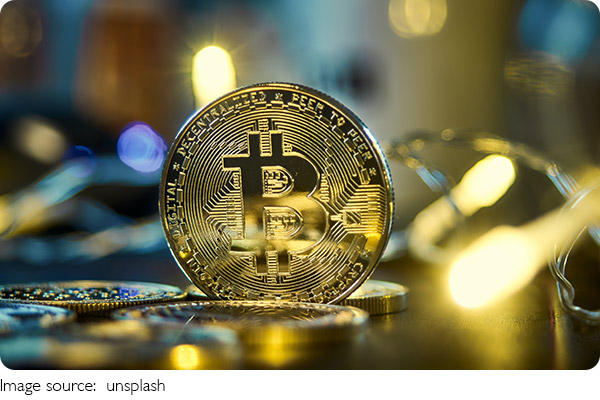
Bitcoin's potential for international payments should not be confused with a complete solution to every cross-border payment problem. Price volatility can create uncertainty between the moment a payment is sent and the moment it is converted into a conventional currency.
Bitcoin is influencing international payments by demonstrating how a decentralized digital network can transfer value across borders without relying entirely on traditional correspondent banking structures. Continuous network availability, direct wallet-to-wallet transfers, and a shared blockchain record provide distinct technological advantages.
At the same time, volatility, network capacity, transaction fees, and currency conversion remain important challenges. The broader significance of Bitcoin may therefore lie not simply in replacing existing payment systems, but in encouraging continued innovation in faster, more accessible, and more efficient international financial infrastructure.