Football for Better Health

Ravish Kumar
| 21-09-2026
 · News team
Football is a dynamic physical activity that combines running, ball control, changes of direction, decision-making, and teamwork.
Regular participation can provide a varied form of exercise while supporting physical fitness and overall well-being.
For people who enjoy active group sports, football can contribute to cardiovascular fitness, muscular conditioning, coordination, mental well-being, and social interaction. The effects can vary according to playing frequency, intensity, fitness level, and overall lifestyle.
Support Cardiovascular Fitness
Football includes walking, jogging, running, acceleration, and repeated changes of direction. This varied pattern provides aerobic activity that challenges the cardiovascular system and can support cardiorespiratory fitness.
Practical ergonomic strategies for supporting neck and shoulder comfort during prolonged computer work
Could Bitcoin help connect payment systems across borders? The potential is worth examining!
One careless click can cause trouble! Learn practical ways to make digital finances safer every day!
Evidence-Based Strategies for Walking, Balance, Strength, and Mobility
Bitcoin and the dollar are taking different paths! What could this mean for global finance?!
What will shape investing next? New technologies, shifting markets, and fresh strategies are changing the game!
Including football in a regular activity routine can be a practical way to incorporate aerobic exercise into the week.
Develop Muscular Fitness
Running, kicking, jumping, landing, and changing direction engage the legs, hips, and core. These movements can support muscular conditioning and functional movement.
Football can complement other activities focused on strength and mobility, providing greater variety within a balanced fitness routine.
Improve Coordination and Agility
Football requires controlled movement while players pass, receive, dribble, and shoot. Maintaining balance and adjusting direction during play also requires precise coordination.
Regular practice can help develop agility, balance, and movement control while making physical activity more engaging.

Support Mental Well-Being
Regular physical activity can contribute to mood, cognitive health, and overall quality of life.
The World Health Organization states: “Physical activity is good for hearts, bodies and minds.”
Football provides an active and engaging environment where players can focus on movement, skills, and the demands of the game. Developing skills and recognizing gradual improvement can also create a sense of achievement and encourage continued participation.
Encourage Concentration
Football requires players to monitor the ball, teammates, available space, and changing situations. They must process information and make decisions while continuing to move.
This combination of physical activity and decision-making engages attention and cognitive skills throughout play.
Build Social Connection
Football naturally encourages communication and cooperation. Passing, positioning, and coordinated play require players to interact and work toward a shared objective.
Regular participation in recreational games or community sessions can provide opportunities for social interaction while making physical activity a shared experience.
Make Football Part of a Healthy Routine
A suitable football routine should reflect an individual's fitness level, experience, and schedule. Beginning with manageable sessions and gradually increasing activity can help the body adjust to regular exercise.
A gradual warm-up, suitable footwear, adequate hydration, and sufficient recovery can support comfortable participation. Football can also be combined with other forms of exercise to introduce variety and address different aspects of physical fitness.
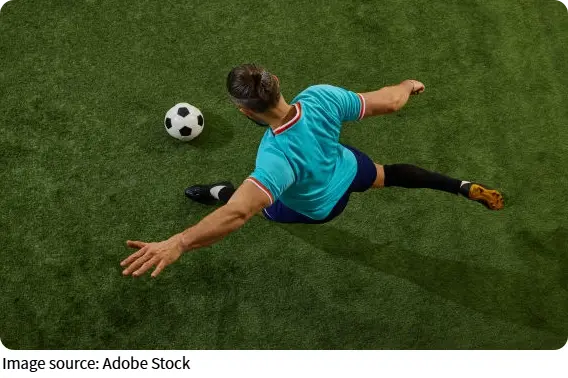
Football brings together aerobic exercise, muscular activity, coordination, cognitive engagement, and social interaction. For people who enjoy the sport, regular participation can be an enjoyable way to remain active and support overall health and well-being.